What's Your Non-Negotiable?
The Most Important Homebuying Decision Happens Before You Tour a Single Home
Most people think buying a home starts with scrolling through listings.
It doesn't.
It starts much earlier, with a question that sounds simple but is surprisingly difficult to answer: What is the one thing you are not willing to compromise on?
At first, many buyers believe they have a long list of requirements. They want a beautiful kitchen, a spacious backyard, an extra bedroom, updated bathrooms, a good neighborhood, a short commute, a low monthly payment, and ideally a home that feels perfect the moment they walk in.
Then reality enters the picture.
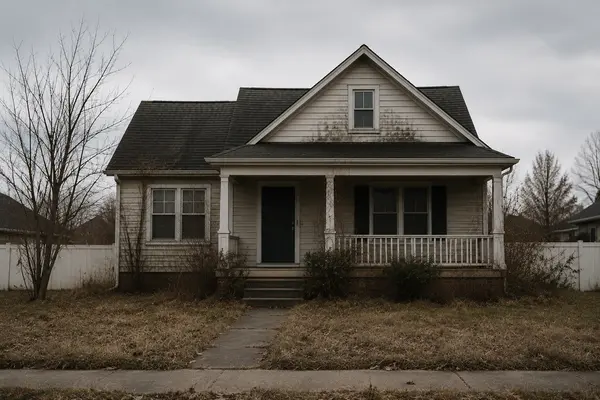
The home with the amazing kitchen is farther from work than expected. The house in the ideal neighborhood is smaller than they hoped. The property with the large backyard needs renovations. The move-in-ready home stretches the budget more than they're comfortable with.
Suddenly, every option feels like a trade-off.
This is where many buyers become overwhelmed. They start changing their criteria from week to week. They compare every new listing to the last one. They tour dozens of homes and leave each showing feeling less certain than before.
What they're experiencing is something psychologists call decision fatigue. The more choices we evaluate, the harder it becomes to make a confident decision. Instead of gaining clarity, we often become more anxious about choosing the "wrong" option.
In real estate, this can be expensive. Some buyers spend months searching for a home that checks every box, only to miss opportunities because they're waiting for perfection. Others make emotional decisions because they never defined their priorities clearly in the first place.
The buyers who navigate the process most confidently usually understand one important truth: every home requires compromise.
No property gives you everything.
What matters is knowing which compromise you are willing to make and which one you are not.
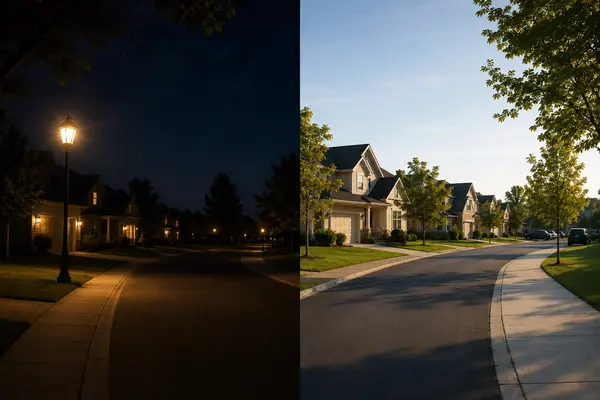
For one family, being close to grandparents may matter more than having a larger house. For another, a short commute may be worth sacrificing square footage. Some buyers refuse to compromise on school districts, while others prioritize walkability, safety, natural light, or the ability to work from home comfortably.
There is no universally correct answer.
But there is usually one answer that is correct for you.
That's why one of the first conversations I encourage buyers to have is not about price, bedrooms, or interest rates. It's about priorities. If everything else changed tomorrow, what is the one feature, location, or lifestyle factor that would still matter most?
Once that becomes clear, the entire home search becomes easier. Listings can be filtered more intentionally. Decisions become faster. Stress decreases because you're no longer chasing an impossible version of "perfect."
And perhaps most importantly, you're more likely to buy a home that still feels right years later, because it was chosen around your values, not just around a wish list.
In the end, the goal isn't to find a home with zero compromises.
It's to find a home that protects what matters most to you.
Categories
Recent Posts