The Neighborhood You Overlook Because of the Name

Somewhere in the city you're searching, there is a neighborhood you've already dismissed.
You didn't drive through it. You didn't research it. You saw the name on a listing and felt something, a vague unease, a half-remembered comment from someone, an association you can't quite trace to its source, and you moved on.
It might be the best place you never considered.
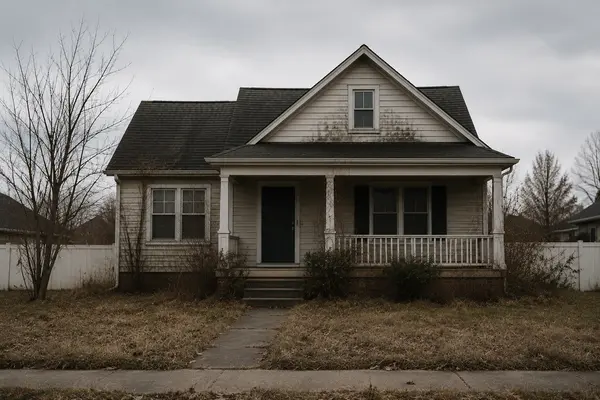
Neighborhoods have reputations the way people have reputations: formed at a specific moment, based on specific circumstances, and often stubbornly resistant to update even when everything that created them has changed.
The reputation sticks. The neighborhood moves on. And the gap between the two, between what a place is and what people think it is. is one of the most interesting and least discussed phenomena in real estate.
How reputations form and why they last:
A neighborhood's identity in the public imagination tends to crystallize around a defining period. Sometimes that period was defined by economic decline, by crime statistics from a specific decade, by a famous incident, or simply by proximity to something people didn't want to be near. The reputation that formed during that period gets passed down informally, through family conversations, through offhand comments, through the kind of received wisdom that nobody questions because nobody thought to.
Meanwhile, the neighborhood changes. Investment comes in, sometimes from developers, sometimes from artists and young families priced out of more established areas, sometimes from a single anchor institution like a university or a hospital that gradually reshapes everything around it. New businesses open. Old ones close. The demographic composition shifts. The physical landscape changes.
But the reputation doesn't update at the same pace. It can lag by a decade or more. People who haven't been there in years still speak with authority about what it's like. People who've never been there at all repeat what they heard from people who haven't been there in years.
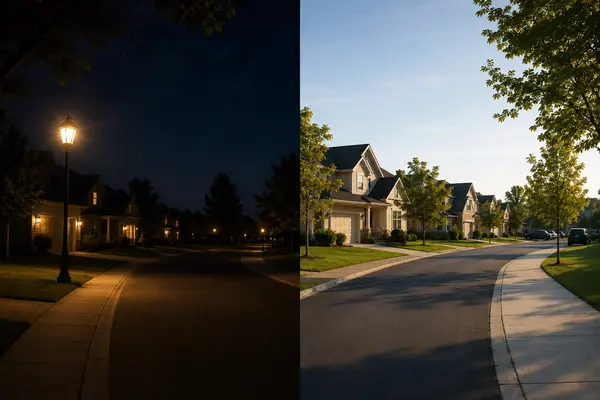
The result is a persistent distortion, a neighborhood that exists in two versions simultaneously: the one in people's minds and the one on the ground.
What actually signals that a neighborhood is changing:
Change in neighborhoods follows patterns, and those patterns are readable if you know what to look for. None of these are guarantees; neighborhoods are complex systems, and change is never perfectly linear, but they are consistent indicators that something is shifting.
The coffee shop and restaurant layer. Independent cafés and restaurants are a reliable leading indicator. They require a customer base to survive, which means the people opening them have done informal market research simply by deciding to be there. When you start seeing independent food businesses, not chains, which follow established data, but small independents betting on a neighborhood, it's usually because the owners are seeing something that hasn't shown up in the statistics yet.
Permit activity. Most municipalities make building permits publicly available. A neighborhood with a high volume of renovation permits, not just new construction, but people fixing up existing properties, suggests that owners, both longtime residents and newer arrivals, believe the neighborhood is worth investing in.
The transition buildings. Every changing neighborhood has what might be called transition buildings, properties that have clearly been renovated recently, sitting next to properties that haven't been touched in decades. These contrasts aren't signs of instability. They're signs of a neighborhood mid-sentence, moving from one identity to another. The contrast itself is the signal.
School enrollment trends. In neighborhoods where young families are arriving, school enrollment tends to increase. This is a lagging indicator; families with children tend to come slightly after the first wave of change, but it's a meaningful one. A school with growing enrollment in a neighborhood with a dated reputation is worth paying attention to.
The weekend morning test. On a Saturday or Sunday morning, walk the neighborhood. Who is outside? What are they doing? The morning weekend population of a neighborhood is one of the most honest representations of who actually lives there, because it's voluntary, nobody has to be outside, so the people who are outside choose to be. A neighborhood that feels alive and community-oriented on a weekend morning, regardless of its reputation, is a neighborhood with the social fabric that makes places work.
The honest caveat:
Not every neighborhood with a bad reputation is in the process of changing. Some reputations are current and accurate. Some places are exactly what people say they are.
The goal isn't to convince yourself that every overlooked neighborhood is a hidden gem. The goal is to evaluate with your own eyes rather than with borrowed conclusions.
Drive through slowly. Walk around. Visit at different times of the day. Talk to the people who are actually there, the person walking their dog, the owner of the small restaurant who decided to open there, the longtime resident who has watched the block change over thirty years. Their perspective is more current, more specific, and more honest than any secondhand reputation.
You might confirm what you suspected. You might find something you weren't expecting.
But at least the conclusion will be yours.
Categories
Recent Posts