Why Some Homes Feel Bigger Than They Actually Are
It's Not Always About Square Footage
Imagine walking into two homes.
Both are exactly 1,800 square feet.
Both have three bedrooms, two bathrooms, and were built within a few years of each other.
On paper, they're almost identical.
But after touring both, you leave convinced that one felt significantly larger.
How is that possible?
The answer lies in something many buyers overlook: our brains don't experience space the same way they measure it.
Square footage tells you how much space exists. Design determines how that space feels.
Understanding the difference can completely change the way you evaluate a home.
Why Your Brain Doesn't Measure Space Like a Tape Measure
When we walk into a room, our brains make thousands of tiny judgments within seconds. We aren't consciously calculating dimensions, we're interpreting visual cues.
Architects and designers have known this for decades.
A room can feel open, calm, and spacious without adding a single extra square foot simply because it uses design principles that influence perception.
This is why some smaller homes leave a stronger impression than much larger ones.
Ceiling Height Changes Everything
One of the biggest contributors to perceived space is ceiling height.
Higher ceilings naturally draw your eyes upward, creating a greater sense of volume. Even adding just one additional foot can make a room feel dramatically more open.
This doesn't necessarily make the room more functional, but psychologically, it creates a feeling of freedom rather than confinement.
It's one reason why older homes with modest square footage but tall ceilings often feel surprisingly spacious.
Natural Light Expands a Room
Light is another powerful tool.
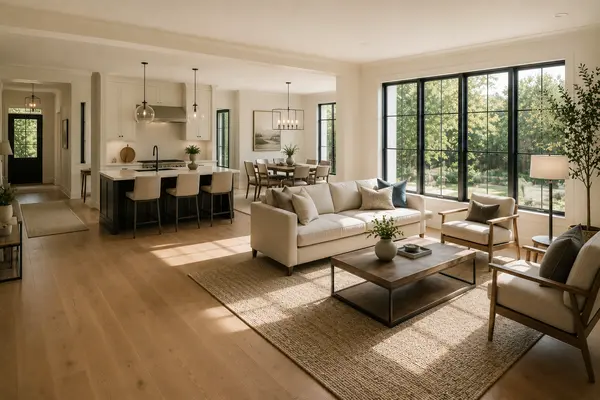
Large windows allow daylight to reach deeper into the home, reducing shadows and making walls appear farther apart.
Natural light also improves our perception of depth, making rooms feel larger than they actually are.
This is why a home with fewer square feet but excellent lighting often feels more inviting than a larger home with limited windows.
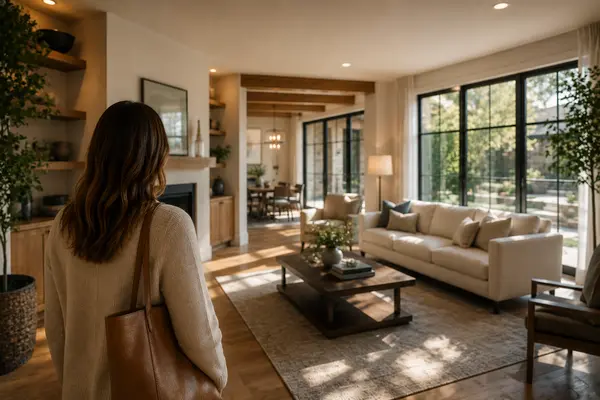
When touring a property, don't just notice how many windows there are.
Pay attention to where they're placed and how sunlight moves through the home during different times of day.
Layout Matters More Than Size
Not every square foot is equally valuable.
Long hallways, awkward corners, oversized foyers, or rooms with unusual shapes can consume valuable space without improving daily life.
Meanwhile, a thoughtfully designed floor plan allows rooms to flow naturally into one another, making movement feel effortless.
Open sightlines also play an important role.
When you can see multiple areas of the home at once, your brain perceives the space as larger because visual boundaries are reduced.
That's one reason open-concept homes remain popular, they maximize perceived space, not just physical space.
Furniture Can Completely Change Your Perception
Ironically, empty rooms often feel smaller.
Without furniture for scale, it's difficult for our brains to judge proportions accurately.
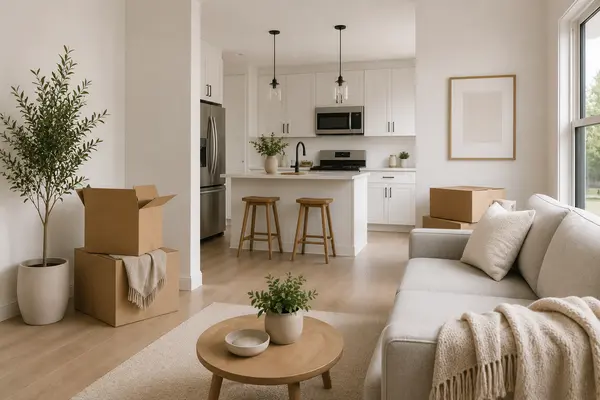
Well-placed furniture creates reference points that help us understand how the room functions.
This is one reason professionally staged homes often leave stronger first impressions.
Staging isn't simply decoration; it's visual communication.
It helps buyers imagine how a space can be used while making rooms feel balanced and appropriately sized.
Don't Shop by Square Footage Alone
It's easy to compare homes by numbers.
But numbers rarely tell the whole story.
A well-designed 1,700-square-foot home may feel significantly more comfortable than a poorly designed 2,100-square-foot home.
Instead of asking only, "How big is this house?"
Ask yourself:
- Does the layout feel intuitive?
- Is there enough natural light?
- Can I move comfortably through the space?
- Does the home feel open or segmented?
Because the way a home feels often matters just as much as the measurements printed on the listing.
The next time you tour a home, remember this:
You're not just evaluating square footage.
You're experiencing design.
Categories
Recent Posts