How to Know If a Neighborhood Is Actually Right for You — Before You Buy
You found the house.
The layout is right. The price works. The photos look great. And then someone asks: "But what's the neighborhood like?" — and you realize you don't actually know.
Most buyers research the home extensively and the neighborhood almost not at all. They check the school ratings, maybe scroll through some crime stats, drive by once on a Sunday afternoon — and call it done.
Then they move in. And they find out what the neighborhood is actually like.
Sometimes it's a pleasant surprise. More often, it's something they wish they'd known before signing.
Here's how to actually do this right.
Why neighborhood research is harder than it looks
The problem isn't lack of data. It's that most of the data available tells you almost nothing about what it actually feels like to live somewhere.
Walk scores tell you how close the coffee shop is. They don't tell you if the street is loud at night. Crime maps show reported incidents. They don't show you how neighbors look out for each other. School ratings measure test scores. They don't capture whether kids in the neighborhood actually play outside together.
The things that determine whether you'll love where you live — or quietly regret it — are almost entirely invisible in online listings.
You're not just buying a home. You're buying into a daily experience. And that experience lives outside your four walls.
The 7 real tests for a neighborhood
These aren't things you can look up. They require showing up — at the right times, in the right ways.
-
Visit at different times of day — and different days of the week
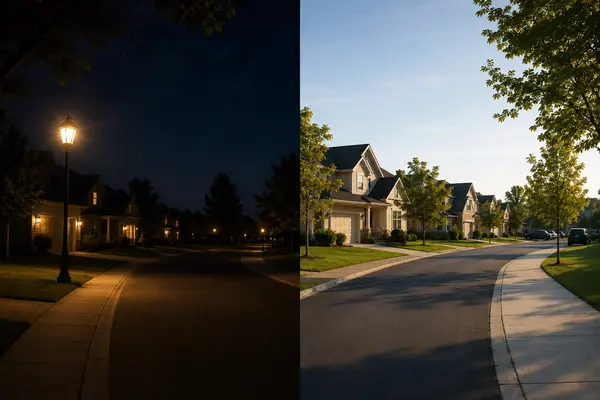
A neighborhood on a Sunday at 11am looks completely different from the same block on a Thursday at 7pm or a Friday night at 10pm. Traffic patterns, noise levels, who's out and about — all of it changes. If you've only seen it once, you haven't really seen it.
-
Walk — don't just drive
A car insulates you from the neighborhood. Walking puts you in it. You notice things: how people acknowledge each other (or don't), whether yards are maintained, whether people are sitting on their porches, whether you feel comfortable. That embodied experience tells you more than any data point.
-
Talk to an actual neighbor — not just your agent
Your agent wants the deal to close. That's not a criticism — it's just reality. Neighbors have no agenda. Knock on a door. Say you're considering buying nearby and ask what they love about the area — and what they'd want to know before moving in. Most people are happy to talk. And what they tell you is gold.
-
Check what's coming — not just what's there
A neighborhood today isn't necessarily the neighborhood in five years. Check the city's general plan, zoning maps, and any pending development permits. A quiet street next to a vacant lot might look very different once that lot gets developed. This is public information — and most buyers never look at it.
-
Eat, shop, and run errands nearby before you buy
Go to the grocery store you'd actually use. Get coffee at the local spot. Drive the actual commute at the actual time you'd be doing it. You're not just evaluating the neighborhood — you're test-driving your future daily life. If it feels off in practice, it'll feel off when you live it.
-
Look at how long homes sit on the market
In a neighborhood people want to leave, homes take longer to sell. In a neighborhood people want to enter, they move fast. Days on market is a behavioral signal — it reflects what actual buyers and sellers think about an area, not what a listing description says about it.
-
Trust the feeling — but interrogate it
Your gut reaction to a neighborhood matters. But ask yourself where it's coming from. Is it based on something real — noise, energy, what you observed? Or is it based on aesthetics alone — the street looked pretty, the houses were well-painted? Pretty neighborhoods and good neighborhoods are not always the same thing. And uncomfortable-looking neighborhoods aren't always what they appear either.
The red flags most buyers overlook
⚠ Watch for these
A lot of rentals on the block. Not inherently bad — but high rental turnover can mean less neighborhood stability and less long-term investment in the community.
Multiple homes for sale at the same time. One or two is normal. A cluster of listings on the same street is worth investigating. Sometimes people just move. Sometimes there's a reason.
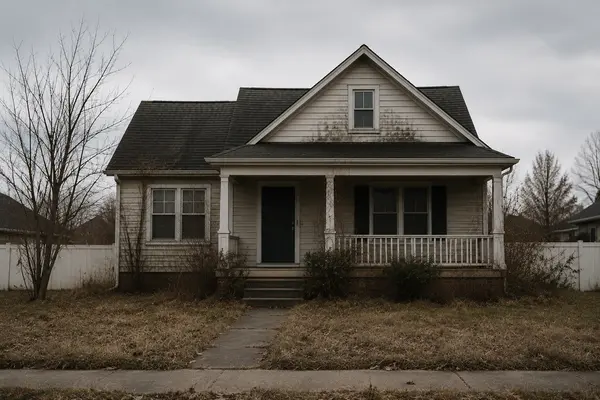
Deferred maintenance everywhere. When multiple homes on a street show signs of neglect, it can signal economic pressure in the area — which affects property values and neighborhood trajectory.
No one outside. A neighborhood where nobody is out — no walkers, no kids, no front porch activity — can feel isolating to live in, regardless of how the house itself looks.
What "good schools" actually means for you
School ratings are one of the first things buyers check — and one of the most misunderstood.
If you have school-age kids, ratings matter. But even then, the rated school isn't always the school your kids will attend — boundaries shift, magnet programs exist, private options may be in play.
If you don't have kids, school ratings still matter — because they affect property values and resale. A home in a highly-rated school district tends to hold value and appreciate better over time, regardless of whether you personally use the schools.
What to actually do: Look up the specific school boundaries for the address — not just the general area. Verify which school your kids would actually be assigned to. And if schools are a major factor, visit them. A school's culture and community don't show up in a rating.
The question that cuts through everything
After all the research, all the visits, all the conversations — there's one question worth sitting with:
Can I picture myself here in five years — not just in the house, but in this neighborhood?
Not on a perfect Saturday. On a random Wednesday. On a day when things don't go quite right. Would you still want to come home to this street, this block, this community?
That answer lives somewhere between the data and your gut. And it's the most important thing to get right.
The house can be renovated. The neighborhood cannot.
The bottom line
Most buyers spend weeks obsessing over square footage, finishes, and floor plans. They spend an afternoon — at most — evaluating the place they'll actually live their life.
That imbalance is worth fixing.
Because five years from now, you won't remember whether the kitchen had quartz or granite. But you will remember whether you feel at home on your street. Whether your neighbors became friends. Whether you made the right call.
The neighborhood is half the purchase. Treat it that way.
Not sure how to evaluate a specific area you're considering?
Let's talk through it together. Whether you're narrowing down neighborhoods or already have a home in mind, getting this piece right before you commit is one of the best things you can do for yourself — and your investment.
Categories
Recent Posts