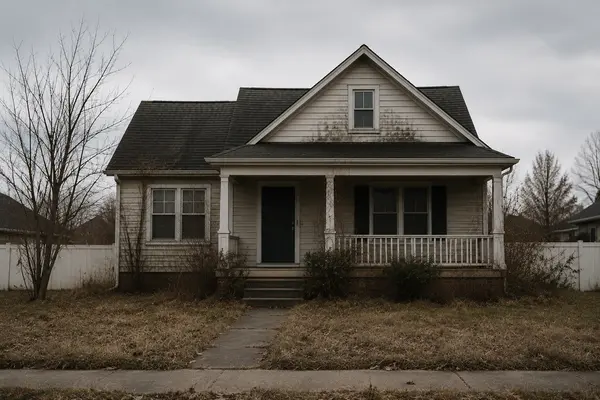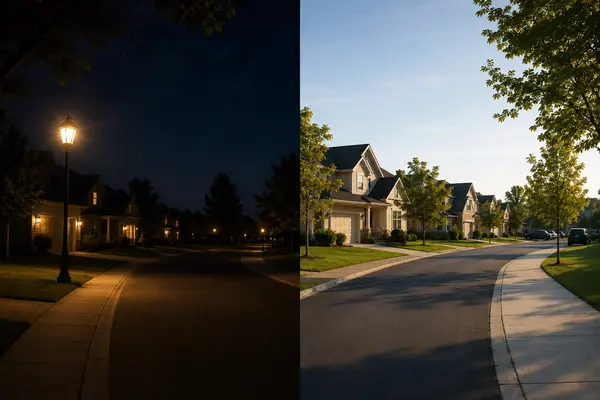
Renting vs. Buying Right Now: The Honest Breakdown Nobody Wants to Give You
If you search "should I rent or buy right now," you'll find two camps.
One side will tell you buying is always the smart move — equity, appreciation, building wealth, stop throwing money away on rent.
The other side will tell you the market is too uncertain, rates are too high, prices haven't corrected enough — just wait.
Both sides are pushing a narrative. Neither one is looking at your situation.
So let's do something different. Let's actually look at both sides honestly — the real trade-offs, the real math, and the questions that actually matter for where you are right now.
First: let's kill the "renting is throwing money away" myth
This phrase has probably done more damage to honest real estate conversations than anything else.
Yes — when you rent, you're paying for housing without building equity. That part is true.
But "throwing money away" implies you're getting nothing in return. And that's not accurate.
When you rent, you're paying for:
Flexibility. You can move without a six-figure transaction and months of process.
Predictability. Your landlord handles the water heater, the roof, the HVAC. When something breaks, it's not your emergency fund.
Optionality. You're not locked into a neighborhood, a city, or a life situation that might change.
Those things have real value. Especially if you're early in your career, if your life situation is in flux, or if you're in a city where buying genuinely doesn't pencil out yet.
Renting isn't failure. It's a choice — and sometimes it's the right one.
Now let's be equally honest about buying
Homeownership builds wealth — that part is real, and the data backs it up across decades. But it's not magic, and it's not automatic.
What renting gives youFlexibility to move anytimeNo maintenance costsLower upfront cash neededNo market risk on the assetPredictable monthly cost
What buying gives youEquity that grows over timeFixed payment (not subject to rent hikes)Tax advantages in many casesStability and roots in a communityFreedom to customize your space
Upfront cash. Down payment plus closing costs. In many markets that's $30,000–$80,000 or more depending on the price point.
Ongoing costs beyond the mortgage. Property taxes, insurance, HOA fees, maintenance — typically 1–2% of the home's value per year. On a $500K home, that's $5,000–$10,000 annually just to maintain it.
Reduced liquidity. Your equity is real — but it's locked in the house. You can't tap it easily without refinancing or selling.
Time horizon. Buying makes most financial sense when you plan to stay at least 5–7 years. Buying and selling quickly often erases any gains once you factor in transaction costs.
Buying isn't inherently better than renting. It's better when the conditions are right — for the market and for your life.
The math that actually matters right now
Here's where a lot of people get stuck: they compare their current rent payment to what a mortgage payment would be — and if the mortgage is higher, they assume renting wins.
That math is incomplete.
What you want to compare is the total cost of renting over time versus the total cost of owning over time — including rent increases, equity accumulation, and what happens to your net worth in each scenario 10 years from now.
Let's use a simplified example:
Renting at $2,200/month today — with a conservative 4% annual rent increase, you'd be paying around $3,260/month in 10 years. Over that decade, you've spent roughly $317,000 on rent. Equity built: $0.
Buying at $480,000 with a 6.5% rate — your principal and interest payment is around $2,528/month (before taxes and insurance). That's higher now. But 10 years in, you've paid down roughly $60,000 in principal, and if the home appreciated even modestly at 3% per year, it's worth around $645,000. Your net position looks very different.
That's not a pitch for buying. That's just what the numbers look like when you extend the timeline.
The shorter your horizon, the more renting can make sense. The longer you plan to stay, the harder it is to argue against owning — even at today's rates.
The three situations where renting is genuinely the smarter move
You're not staying put for at least 5 years.
Transaction costs alone — agent commissions, closing costs, moving — can run 8–10% of a home's value. If you sell in two years, those costs wipe out most or all of your equity gains.
Your financial foundation isn't solid yet.
Buying when your emergency fund is thin, your income is unstable, or your debt load is high isn't brave — it's risky. Homeownership amplifies your financial position, good or bad. Get the foundation right first.
The local market is genuinely out of reach right now.
Some markets just don't pencil out at current prices and rates. If buying means stretching so far that you'd be financially fragile, renting while you build more savings is a legitimate strategy — not a failure.
The three situations where buying makes more sense than people realize
You've been "almost ready" for two or three years.
Every year you wait, rent increases compound and buying power can erode. "Almost ready" has a real cost — and it's worth calculating what that cost actually is before waiting another year.
Your rent is approaching — or exceeding — what a mortgage would cost.
In many markets, rents have risen so much that the payment gap between renting and buying has narrowed significantly. If you're already paying $2,400 in rent, a $2,600 mortgage starts to look different — especially when part of that goes to equity.
You have the down payment but keep waiting for "better conditions."
If you have the cash, the income, and the stability — the main thing holding you back is uncertainty about timing. And timing the market is something almost nobody does successfully, even professionals.
The right answer isn't rent or buy. It's: what does the math actually show for your specific situation, right now?
What this decision actually comes down to
After all the numbers, here's the honest truth:
There is no universal right answer. Anyone who tells you otherwise is either selling something or oversimplifying.
What there is — for every person in every situation — is a right answer for them. Based on their income, their savings, their timeline, their market, and what they actually want their life to look like in 5 or 10 years.
That answer comes from running the real numbers with someone who isn't rooting for one outcome over the other.
Not from a headline. Not from a friend who bought last year. Not from a social media post telling you that now is always the time to buy — or always the time to wait.
From clarity. From your actual numbers. From an honest conversation.
That's what changes the decision from stressful to simple.
Not sure which side of this equation you're on?
Let's run the real numbers for your situation — no pressure, no agenda. Just a clear picture of what renting versus buying actually looks like for you right now, so you can make the decision with confidence instead of guessing.
Categories
Recent Posts